How to Create a Seamless User Experience Across Every Touchpoint

Margaret Thornfield
16 April 2026
How to Create a Seamless User Experience Across Every Touchpoint
Imagine this: a customer discovers your brand through a beautifully designed Instagram ad, clicks through to your website only to find a clunky, outdated interface, and then tries to reach customer support via your mobile app — only to repeat their issue three times. Sound familiar? Unfortunately, this kind of fragmented experience is more common than most businesses realize, and it’s costing them customers every single day.
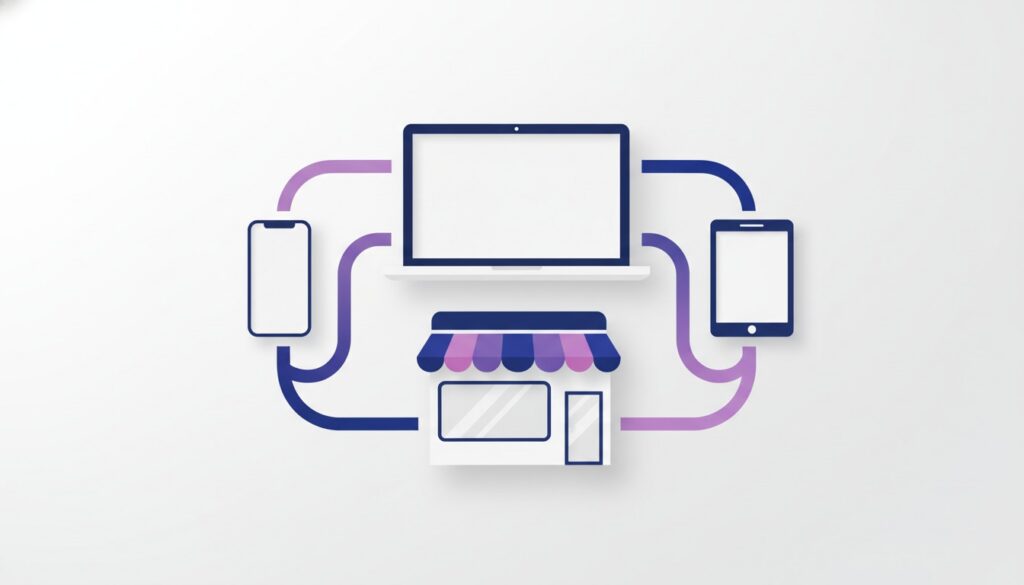
In today’s hyper-connected world, your customers don’t think in terms of “channels.” They think in terms of experience. Whether they’re browsing your website on a laptop, tapping through your mobile app on a commute, walking into your physical store, or chatting with a support agent, they expect one thing: consistency. They expect to feel like they’re interacting with the same brand at every step of their journey.
In this comprehensive guide, we’ll break down the strategies that top-performing companies use to deliver frictionless, cohesive experiences across every touchpoint — and show you exactly how to implement them in your own business.
Why Seamless User Experience Matters More Than Ever
Before diving into the “how,” let’s establish the “why.” The stakes for delivering a seamless user experience have never been higher.
The Modern Customer Journey Is Non-Linear
Gone are the days of a simple marketing funnel. Today’s customers might:
- Discover your brand on social media
- Research your product on a desktop website
- Read reviews on a third-party platform
- Make a purchase through your mobile app
- Seek post-purchase support via live chat or phone
- Higher customer lifetime value (CLV): Customers who have consistent experiences spend more over time.
- Reduced churn: Friction at any touchpoint gives customers a reason to leave.
- Stronger brand loyalty: Consistency builds trust, and trust builds loyalty.
- Increased referrals: Delighted customers become brand advocates.
- Identify all channels: List every platform, medium, and location where customers interact with your brand. This includes your website, mobile app, social media profiles, email campaigns, physical stores, customer support lines, packaging, and even invoices.
- Document the customer journey stages: For each channel, note which stage of the journey it typically serves — awareness, consideration, purchase, onboarding, retention, or advocacy.
- Gather real customer data: Don’t rely on assumptions. Use analytics tools, customer surveys, session recordings, and support transcripts to understand how customers actually move between touchpoints.
- Identify pain points and gaps: Look for moments where the experience breaks down. Common culprits include:
- Color palette and typography rules
- Button styles, form fields, and UI components
- Spacing, grid systems, and layout principles
- Icon libraries and illustration styles
- Accessibility standards (contrast ratios, font sizes, alt text requirements)
- Tone: Are you friendly and casual, or professional and authoritative?
- Vocabulary: Are there specific words or phrases you always use — or avoid?
- Formatting preferences: How do you write headlines, CTAs, and error messages?
- Create cross-functional UX teams: Embed designers, researchers, and content strategists across departments rather than isolating them in a single “UX department.”
- Implement shared tools and platforms: Use a unified CRM (like Salesforce or HubSpot) so that every team has access to the same customer data. When a support agent can see a customer’s entire history — including marketing interactions, purchase history, and previous support tickets — the experience feels seamless.
- Align on shared KPIs: If marketing is measured on lead volume but support is measured on ticket resolution time, their incentives may conflict. Align teams around customer-centric metrics like Net Promoter Score (NPS), Customer Effort Score (CES), and customer lifetime value.
- Hold regular cross-functional reviews: Schedule monthly or quarterly sessions where teams share insights, review customer feedback together, and identify experience gaps that fall between departmental boundaries.
- Customer Data Platform (CDP): A CDP aggregates customer data from all sources into a single, unified profile. This enables personalized, context-aware experiences across every channel.
- Omnichannel Communication Tools: Platforms like Intercom, Zendesk, or Twilio allow you to manage customer conversations across email, chat, SMS, social media, and phone from a single interface — preserving context as customers switch channels.
- Content Management Systems (CMS) with Multi-Channel Support: A headless CMS allows you to create content once and distribute it across your website, app, kiosk, and other digital touchpoints while maintaining consistency.
- Analytics and Session Recording: Tools like Google Analytics 4, Mixpanel, Hotjar, and FullStory help you understand how customers move between touchpoints and where they encounter friction.
- API-First Architecture: Building your technology stack with APIs ensures that different systems can communicate with each other, enabling features like real-time inventory syncing between your website and physical stores.
- Remember preferences across channels (e.g., saved items, preferred language, communication preferences)
- Provide contextual recommendations based on browsing and purchase history
- Anticipate needs by analyzing behavioral patterns
- Conduct regular cross-channel usability testing: Don’t just test individual touchpoints in isolation. Design test scenarios that require participants to move between channels — for example, starting a purchase on mobile and completing it on desktop.
- Monitor key metrics across the journey:
- Collect qualitative feedback: Surveys and analytics tell you what is happening. Customer interviews and open-ended feedback tell you why. Both are essential.
- Run A/B tests across touchpoints: Test different approaches to cross-channel transitions. For example, does sending a follow-up email after an in-store visit improve online conversion rates?
- Prioritizing aesthetics over functionality: A beautiful interface means nothing if it’s confusing or slow.
- Ignoring accessibility: A seamless experience must be seamless for everyone, including users with disabilities. Follow WCAG guidelines across all touchpoints.
- Over-personalizing to the point of creepiness: There’s a fine line between helpful personalization and invasive surveillance. Be transparent about data usage and give customers control.
- Launching too many channels too quickly: It’s better to deliver an excellent experience on three channels than a mediocre one on ten. Start where your customers are and expand deliberately.
- Treating mobile as an afterthought: With mobile traffic exceeding desktop in most industries, your mobile experience should be a first-class citizen, not a scaled-down version of your desktop site.
The Business Impact Is Real
“Companies that prioritize omnichannel customer engagement retain an average of 89% of their customers, compared to just 33% for companies with weak omnichannel strategies.” — Aberdeen Group
Seamless experiences don’t just make customers happy — they drive measurable business outcomes:
Step 1: Map Every Customer Touchpoint
You can’t fix what you can’t see. The first step toward a seamless experience is creating a comprehensive touchpoint map that documents every interaction a customer has with your brand.
How to Build a Touchpoint Map
Pro Tip: Create Customer Journey Personas
Don’t just create one generic journey map. Build multiple maps for different customer personas. A first-time visitor navigating your website has very different needs than a loyal customer reaching out to support. Understanding these distinct journeys allows you to tailor the experience at a granular level.
Step 2: Establish a Unified Design System and Brand Language
One of the most common reasons experiences feel disjointed is a lack of visual and verbal consistency. When your website uses one color palette, your app uses another, and your emails feel like they were written by a completely different company, customers notice — even if subconsciously.
Build a Design System
A design system is a collection of reusable components, guidelines, and standards that ensure visual consistency across every digital touchpoint. It typically includes:
Define Your Brand Voice
Beyond visuals, your brand voice should remain consistent across every touchpoint. Create a brand voice guide that defines:
A customer should be able to read an email, a push notification, and a support chat message from your brand and feel like they’re talking to the same entity.
Step 3: Break Down Organizational Silos
Here’s an uncomfortable truth: most inconsistent user experiences aren’t a design problem — they’re an organizational problem.
When your marketing team, product team, sales team, and customer support team all operate independently with their own tools, metrics, and priorities, the customer experience inevitably fragments.
Strategies for Breaking Down Silos
Real-World Example: Disney
Disney is often cited as the gold standard for seamless experiences. From the moment you visit their website to plan a trip, to the My Disney Experience app that manages your itinerary, to the MagicBand wristband that serves as your hotel key, park ticket, and payment method — every touchpoint is connected. This isn’t accidental. It’s the result of deliberate cross-functional collaboration and a company-wide commitment to the guest experience.
Step 4: Leverage Technology to Connect the Dots
Technology is the backbone of seamless experiences. Without the right infrastructure, even the best-intentioned teams will struggle to deliver consistency at scale.
Essential Technology Investments
The Role of Personalization
Seamless doesn’t mean identical. The best experiences are both consistent and personalized. Use customer data to:
Personalization at scale is the difference between a seamless experience that feels generic and one that feels genuinely thoughtful.
Step 5: Test, Measure, and Iterate Relentlessly
Creating a seamless experience isn’t a one-time project — it’s an ongoing discipline. Customer expectations evolve, new touchpoints emerge, and technology changes rapidly. The companies that win are the ones that continuously test and improve.
Build a Continuous Improvement Framework
Create Feedback Loops
Ensure that insights from testing and measurement flow back to the teams responsible for each touchpoint. A finding from customer support should inform product design. A trend in website analytics should shape marketing strategy. Feedback loops are the circulatory system of a seamless experience.
Common Pitfalls to Avoid
Even with the best intentions, companies often stumble when trying to create seamless experiences. Here are the most common mistakes:
Conclusion: Seamlessness Is a Competitive Advantage
In a world where customers have more choices than ever, the experience you deliver is often the deciding factor. Price and product features can be replicated. A truly seamless, delightful experience across every touchpoint is much harder to copy — and that’s exactly what makes it such a powerful competitive advantage.
The path to seamlessness requires a combination of strategic thinking (mapping journeys, breaking down silos), tactical execution (design systems, brand voice guides), and technological investment (CDPs, omnichannel tools, APIs). Most importantly, it requires a cultural commitment — a shared belief across your entire organization that the customer’s experience is everyone’s responsibility.
Start small. Pick the most critical customer journey, map it end to end, identify the biggest friction points, and fix them. Then expand. Over time, these incremental improvements compound into something remarkable: an experience so smooth that customers don’t even notice the transitions between touchpoints. And that’s the ultimate goal — when the experience is truly seamless, it becomes invisible.
Ready to Transform Your User Experience?
If this guide resonated with you, here’s your next step: audit your current customer journey this week. Pick one persona, trace their path from first contact to post-purchase, and document every moment of friction you find. You might be surprised by what you discover.
Want more actionable UX strategies, design thinking frameworks, and real-world case studies? Subscribe to our newsletter and never miss a post. And if you have questions or want to share your own experience with cross-channel UX challenges, drop a comment below — we’d love to hear from you.
Written by Sarah Johnson — UX strategist, design systems advocate, and firm believer that great experiences don’t happen by accident.